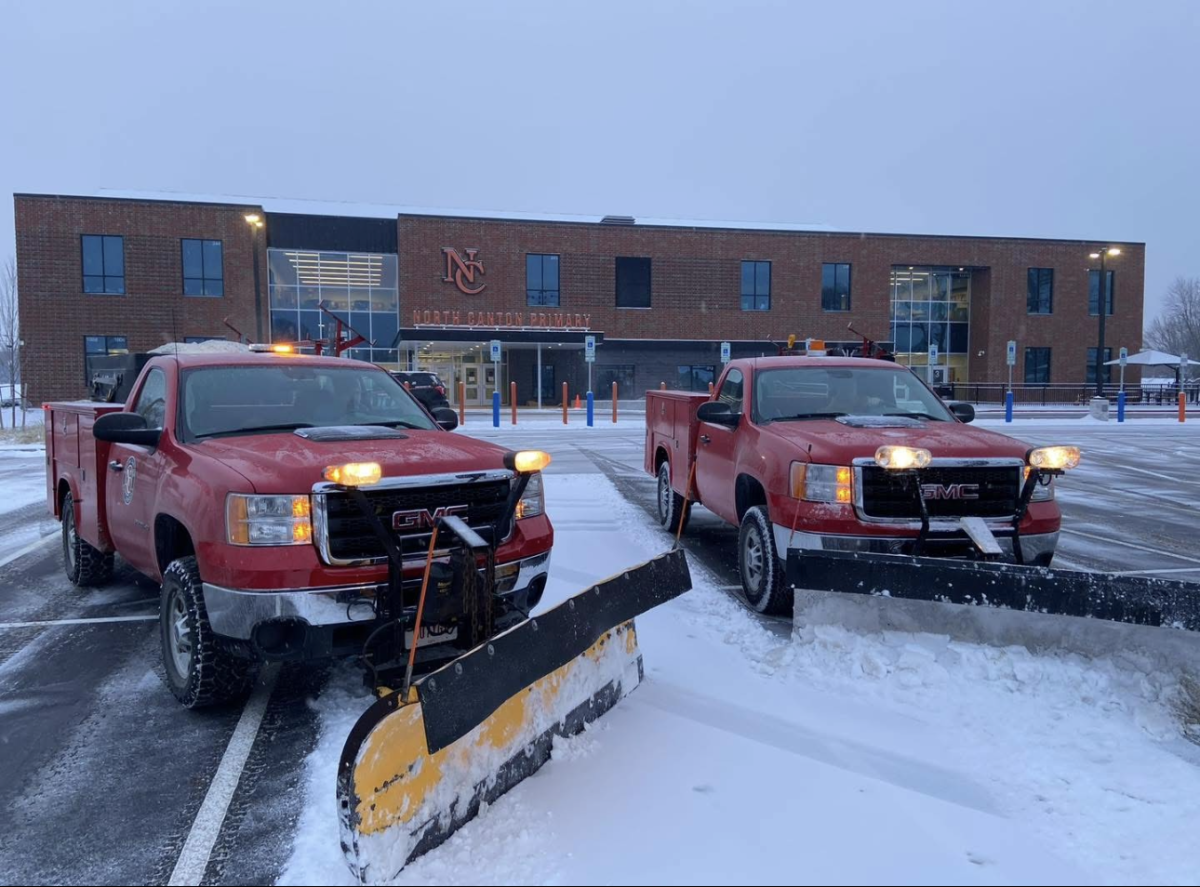
Winter Storm Fern was a massive snow storm that swept across the entire nation and affected the first couple of weeks of the second semester in January. Ohio experienced mountains of snow and extremely low temperatures. According to Ohio’s Department of Health, “most of central and southern Ohio [was] under a winter storm warning,” with an expectation of 8-12 inches of snow. Due to these conditions, NCCS was forced to call multiple calamity days.
The decision to call a calamity day lies in the hands of NCCS Superintendent Tim Walker. When the weather conditions worsen, there is a procedure that needs to be followed in order to make the correct decision.
“[The school] has a whole process [to decide on a calamity day]…” he said. “Most days we get up around 4:30 in the morning and I and others drive the roads, and I talk to other superintendents from neighboring school districts and we all kind of put our heads together on what we’re seeing out[side] and what’s happening. So, we usually try to make a call by 5:00 or 5:15 am [that day]. Typically, that’s the process. This one was unique, we got so much snow that we were able to call it on Sunday afternoon, [the day before].”
A worry from the students was missing too many hours and having to extend the year into summer break. This was not a concern in the district office, as Ohio grants its schools enough hours to avoid the issue.
“We’ve used five total snow/calamity days this year, whether it’s snow or cold, but we technically could probably still get by with another one or two before we worry about making them up,” Walker said. “If we miss too many [hours], we have to make up the hours. So, we would either have to add a day onto the end [of the] school [year] or make a day longer.”
Ohio’s Department of Education does not have a set number of hours for calamity days, but it does have a minimum number of hours students grade seven through 12 must follow, as well as a procedure for staying above the minimum.
Their website states, “Schools may schedule ‘excess’ hours above the minimum number. Hours missed above the minimum do not have to be made up. However, if a school closes enough that it will fall below the minimum number of hours, the school must extend its scheduled year.” As well as, students grade seven through 12 must attend 1,001 hours of school.
Missing school days is exciting for students to receive free time, but it also worries many about falling behind with school work. Junior Alyssa Ward was one of those students.
“I think [calamity days] definitely slows down learning because it pushes back curriculum, but on the positive side it is all about the safety of the students and faculty when it comes to whether or not schools should be open,” she said. “It’s up to our administrators to make the right choices for the district as a whole.”
Walker agreed that the safety of the student body and faculty was the most important reason for calling a day off. When addressing this issue, he and the entire administration weighed every factor and component that affects both parties — school and safety.
“We always are going to err on the side of caution in terms of student safety,” Walker said. “It’s never perfect. When I’m out driving in the morning…we try to cover a wide area of the district and we don’t just drive [on] the city roads where it’s usually pretty clear, we try the country roads and up in Lake Township and different places like that, so we have a full understanding of what the roads are like. The timing of these storms sometimes makes it difficult, so sometime it is tough to [call a snow day] because the snow comes right as everyone is driving in the morning or something like that. All that to say, we’ll figure out how to get the hours in and we’re always [going to] prioritize safety.”
Even though Ward was worried about her school work, she agreed with the district’s decision and appreciated their thought towards the students.
“I think that [the school’s closure was the right choice] because it was super cold out in the morning when kids were going to school and in the afternoon when kids were supposed to be leaving school,” she said. “[The school] has to think about the walkers and the buses on the road and kids driving to school, so I would definitely say they did make the right choice using all of their days.”