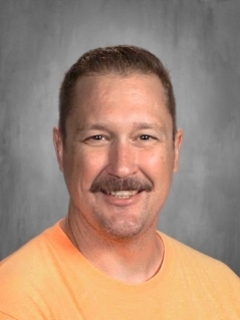
History and economics teacher Mr. Andrew Arnold was faced with a very abrupt change last month. A serviceman in the Ohio National Guard, he was made aware of his year-long deployment less than a week before he had to leave. This major change meant leaving his family, students and himself in a difficult position, but they all are continuing to work through this. I had the opportunity to speak to him via email about his recent deployment.
Q – How do you handle the emotional and mental challenges of being away from home while still staying focused on your professional responsibilities?
A – I would say this has been the most difficult part of my deployment so far. I am missing my wife and daughters very much and a lot of responsibility has fallen onto my wife to manage everything back home while I am away. We have an incredible support system of family, friends, and coworkers who have really been a blessing.
Q – Have you found any similarities between your deployment experience and your work as a teacher, in terms of leadership, teamwork, or problem-solving?
A – My work as a teacher, department chair, and coach have definitely come in handy while down here. I am the Division Team Chief for our area and having the organizational skills and training/teaching experience from my civilian job allowed me to step into this role quickly and efficiently. Those skills, combined with 19 years in the reserves, have allowed me to be successful in my role.
Q – What kind of personal growth have you experienced during your deployment, and how do you think it will affect your future teaching
A – I’ve only been down here a few weeks out of a yearlong deployment, but the most growth I’ve seen in myself would have to be learning to trust those around me to get the job done. I have a bad habit of wanting to control everything and I’ve really needed to rely on others to manage the house, finances, the mission, and teaching. Giving up control has allowed me to focus on what I am doing down here and to take care of the men and women in my division.
Q – What has been the most rewarding part of your deployment experience so far, and how has it influenced your outlook on life and work?
A – The most rewarding part of my deployment would have to be the people I’m working with. I have about 40 people working in my division and they are coming from all over the country to complete a mission. Everyone has a unique story, history, experiences, and outlook and I really enjoy working with such a professional group of men and women.
Q – Are there any plans or ideas for professional development you’d like to pursue to further merge your military/ deployment experience with your role as an educator?
A – I feel like a lot of the things I am doing down here translate well to my civilian career as a teacher. Time management, dealing with personnel, training plans, logistics, and organizational skills can absolutely help me in my teaching. Having had 19 years in the reserves, I already did a lot of this already.
Q – Do you think your deployment will influence your long-term career path in education? If so, in what ways?
A – I don’t believe so. I am ready to retire from the Coast Guard after this deployment and to return to teaching. I miss being in the classroom with my students and I am looking forward to next year when I can get back into it.
Q – When are you predicted to arrive home and begin to teach again?
A – I am scheduled to be off on November 11th, 2026. I am not sure how much time I will take off after I get back but I plan on returning as soon as possible. I will have a few opportunities to return home for a few days here and there and am looking forward to spending quality time with my family.
Q – What advice would you give to other teachers who may find themselves in a similar situation, balancing deployment and education responsibilities?
A – My advice would be to lean into your support system. If you try to do everything on your own, it’s going to be difficult. Surround yourself with great people and it makes the deployment easier.