The Teachers
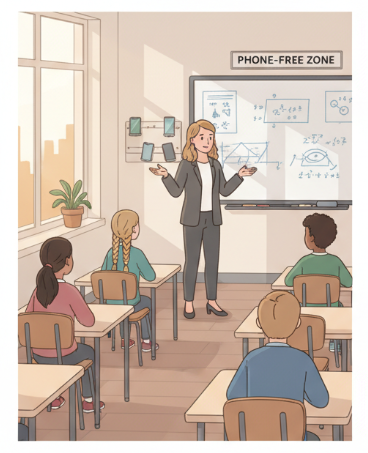
The State of Ohio implemented a statewide phone ban Jan. 1. Schools around the state are currently navigating this phone ban as it is fairly new. Hoover High School teachers share their opinions on this new rule and how they feel this will positively impact students.
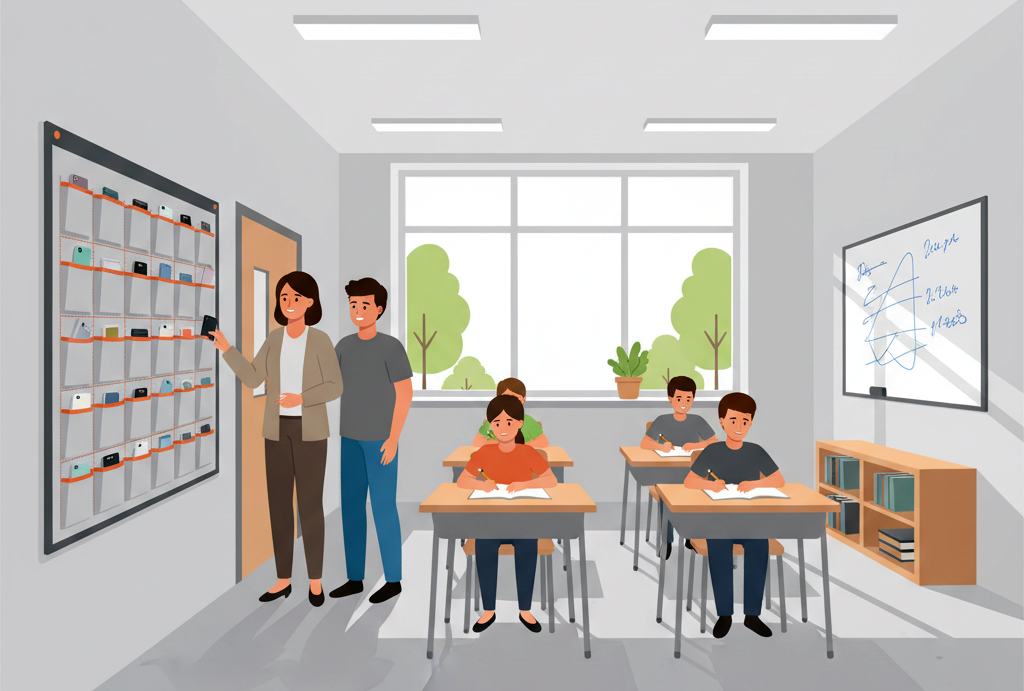
Science teacher, Mrs. Emily Shaub, talks about what her phone policy in the classroom looked like before the phone ban went into place.
“Right now [December] my phone policy involves the cell phone hotel,” she said. “The phones are either put in their assigned number OR I don’t see the phone at all. If I do see it, I will place it in phone jail until the end of class.”
Although classrooms have certain policies for phones put in place, it does not promise that there would be no resistance for students. “The biggest areas of concern I could see being a problem would be the phone use in the hallways, study hall and lunch time,” she said. “I would argue that this is probably the largest amount of time students are on their phones so this will definitely be the biggest adjustment for them.”
Shaub tells us how she hopes this ban will give structure for students, allowing them to be more productive throughout the school day.
“I agree that a cell phone ban is necessary if it means having a uniform policy throughout the school,” she said. “Students do best with structure and there is plenty of research that reducing distractions increases academic performance. There is also the mental health aspect to consider. Having decreased screen time and increasing social interaction has proven to improve mental health!”
AP Government teacher, Mr. Rob Motz, has a firm viewpoint on phones in classrooms. Motz talks about why he believes that this phone ban is necessary for the wellbeing of Hoover students.
“Phone use has created more social isolation, less engagement, and more meaningless distraction,” he said.
Similar to Mrs. Shaub, Mr. Motz also believes that there will be challenges as the phone ban is enforced.
“Many students are literally addicted to their phones; tech companies have admitted that they have intentionally recreated other addiction models in designing their products such as drug addiction and gambling,” he said. “There will be resistance.”
Math teacher, Mr. Kyle Kelly, had a more laid-back approach to phones prior to the law being put into effect. Kelly tells us about what his phone policy looked like in December.
“Prior to the law, I usually was more relaxed with my phone policy,” he said. “With teaching high school students, they are aware that it is their grade being affected if they are not paying attention. If students would abuse that privilege of not having a strict policy, then I would utilize my ‘cell phone hotel.’ I usually would begin the year by telling students that if they have free time, then I don’t mind. I find it disrespectful if it is during instruction.”
Kelly also believes that this phone ban will bring more engagement from students and give them more time to be able to complete their work during downtime.
“I feel like it is needed. Not only do I feel that students will be forced to be more engaged in class time, they will have a better advantage of any free time throughout the day to complete work. Ideally, they will chip away at any homework throughout their free time in the day rather than sitting and scrolling on their phone.”
A concern for some parents and students is safety. Without phones, it may cause some to be anxious, in the case of an emergency. Kelly tells us about his opinion on this concern.
“I do not currently have any concerns,” he said. “I know all situations are different, and the adults should be responsible enough to let students know what is happening. If it is a serious situation, then students’ phones will still more than likely be in the room with them and they will be able to communicate.”
For Shaub, she too believes that safety is the schools ultimate responsibility and students should not need to worry.
“I personally do not have any concerns,” she said. “We have constant communication with the office and the district has been great about communicating all important information on parent square. This would be the most reliable way for all parents to receive the most accurate and up to date information.”
Molly Andrews ‘26
The Students
Phones.
The small piece of technology that has become this generation’s life line, but now the administration and House Bill 250 have taken that away. On Jan. 1, a statewide phone bill started, which caused for a new phone policy at Hoover. From beginning the year with using our phones during study halls, lunches and in the classroom, to the second half of our year without them at all.
But how are the students truly affected by this change in policy? Senior JJ Herzog shares what he would use his phone for during the day.
“I usually use my phone to text my friends to make plans for lunch or spend time on social media after class,” he said.
There are times in class where students would have down time, and using their phone wasn’t a distraction to what was being taught that day. While phones may be a distraction at times, they were still being used for some sort of benefit. Junior Kay Hayford shares how she would use her phone during the day.
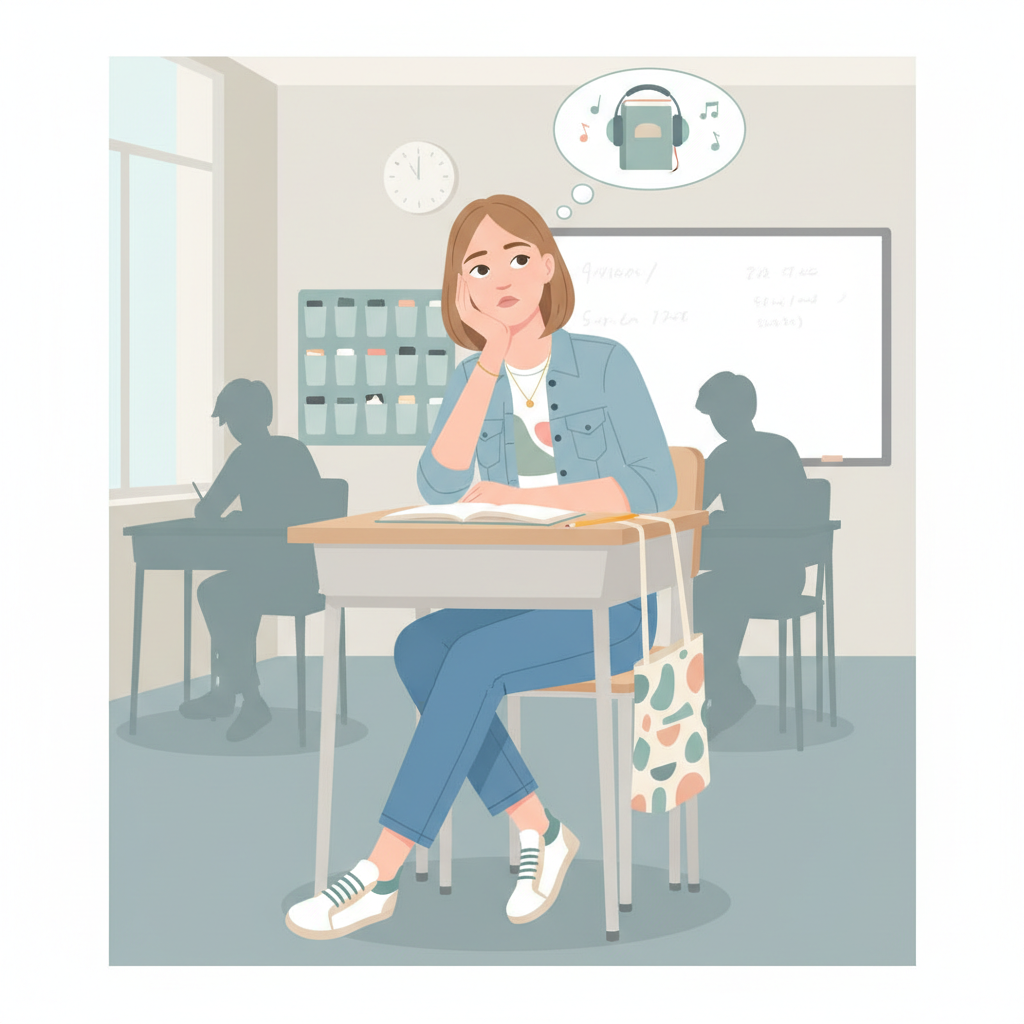
“I also use my phone for its hot spot to have better Internet connection for my chromebook,” she said. “This year has also been the first year that I started listening to music using my phone during school, and it’s been nice.”
With many students all on chromebooks all at the same time, the WiFi in certain classrooms might not be ideal for those trying to get work done. The option to be able to use a personal hotspot, if you have one, was nice for those who needed a faster Internet connection then the crowded school WiFi. Senior Joseph Merritt shares another productive way he has to use his phone in class.
“Occasionally, I have to use my phone to transfer documents and materials from my phone to my chromebook,” he said.
While these are all reasons that students use their phones, there are some positives that come with students not being glued to their phones.
“Without the option of phones students will have no choice but to talk to people or do something academic,” Hayford said. “The lack of phones will be a great opportunity for more people to be fully in the moment and engaged with who they are with.”
Without phones for when class ends early or lunch time, students will be able to talk to their peers more, causing them to truly engage in what is going on around them.
“Within the classroom, students will likely become more social, but it will also inhibit social activities outside of school,” Herzog said.
With students being on their phones less during the day, this might cause students to go home and sit on their phones, this could cause less social interaction outside of the school day. However at the same time, it may cause less communication between friends both inside and outside of school.
“However, it’s rare you have friends in every single class during the day,” Merritt said. “This can create social isolation because now students can’t text their friends during the day.”
While students are able to see the positives to the phone ban, they are also seeing the negatives within the policy. One of those being able to communicate with parents and friends that aren’t in the same classes.
“Often, I use my phone in order to make lunch plans with friends or ask my parents important questions about my schedule throughout the day,” Herzog said. “The lack of phones will eliminate any form of this vital communication.”
Being able to communicate with parents is huge during the day, especially if it is something personal. While you are able to go to the office to call home, those who may not be comfortable asking to do so are now stuck without that easy form of communication.
“I am definitely concerned about texting my parents during the day,” Merritt said. “I regularly need to text my parents during the day in order to know who is picking my sibling up, who is feeding the dogs, and what time everyone will be home.”
On top of the concern of not being able to easily communicate with parents, the students biggest disagreement with the phone ban is not being able to use their phones during lunch and study halls.
“I do think phones should be allowed during lunch and study halls because there is no active lesson happening,” Hayford said. “Also, on the rare occasion I have all my homework done, and I’m not allowed to talk during study hall, it would be nice to be on my phone.”
There may be some days where students don’t have homework to work on or tests to study for. Students in study halls might not have the option to talk to their peers as well.
“I fully believe that phones should be able to be utilized during lunch and study halls,” Herzog said. “The language of the legislation indicates the lack of phones during instructional time.”
Many might agree that phones should be banned from the classroom and that for some they are a distraction to learning. However lunch, the hallways, and study halls are truly where students are upset the most.
“Study halls and lunches have never been used to instruct students and should therefore be exempt from the ban,” Herzog said.
Overall, there are pros and cons that the students have found without their phones during the school day. Students are able to see both sides of the argument, on the policy side of how they can be a distraction in the classroom, while also seeing how they may need their phones during the school day. While students wish they could make a few changes, this is our new normal that will take getting used to.
Irene Warner ‘26

![Ariel [Hoover freshman Emma Mead] attempts to sing without her voice in North Canton Playhouse’s production of “The Little Mermaid.”](https://thevikingviews.com/wp-content/uploads/2026/03/IMG_4945-1200x800.jpg)

![[from left] Freshman Austin Weaver, senior Carys Eynon, senior Andy Reynolds, and junior Nolan Pellegrino journey on the Yellow Brick Road towards the Emerald City.](https://thevikingviews.com/wp-content/uploads/2026/03/2025_Wizard-of-Oz_Web-274-1200x800.jpg)